AI packaging design is becoming a practical workflow for beauty packaging

AI packaging design is now a workflow question, not only a visual trend
AI packaging design is changing how beauty teams explore structures, graphics, claims hierarchy and retail presentation. It does not replace packaging judgment. Its clearest value is helping teams compare more directions earlier: minimalist cartons, refillable systems, mono-material formats, secondary packaging reductions, shade-family coding and e-commerce-ready unboxing. The limits are just as important. A package still has to pass regulatory review, supplier feasibility, material testing, brand approval and consumer readability checks. In beauty, AI is best treated as a design accelerator inside a controlled workflow, not as final artwork or a compliance authority.
This shift matters because cosmetic packaging now has to balance visual differentiation, sustainability pressure and tighter documentation. For more context on packaging strategy and design themes, visit our packaging design section.

What AI can realistically improve in beauty packaging
For beauty brands and packaging teams, the most practical AI use cases sit in the early and middle stages of development. The technology can turn a written design brief into several visual territories, organize competitor references, test alternative layout hierarchies and help teams prepare clearer handoff notes for designers, engineers and suppliers. That does not make every output usable. It means the first round of exploration can be broader, faster and easier to compare.
Public industry research points in the same direction. McKinsey’s 2025 global survey of paper and packaging leaders reported that many companies had moved from discussion to action, with 82% of respondents saying their function had launched, was developing or was considering generative AI solutions, compared with 30% in 2024. The same survey covered major substrates and end markets, including cosmetics and beauty. This does not prove that AI has solved packaging design, but it does show that packaging companies are testing it beyond novelty use.
In a beauty packaging workflow, AI can support several practical tasks:
- Concept exploration: building visual directions for jars, bottles, tubes, cartons, sleeves, refill pouches and gift sets before the team commits to one route.
- Brand system variation: applying a color, typography or illustration system across product families such as cleansers, serums, masks and lip products.
- Retail and e-commerce visualization: showing how a pack may read on a shelf, in a thumbnail image or inside a shipping box.
- Sustainability ideation: comparing refill, reduction, mono-material, paper-based and lightweighting concepts before technical validation.
- Internal communication: turning scattered feedback into clearer creative directions, decision notes and supplier questions.
The main benefit is speed of comparison. Beauty packaging often depends on subtle signals: clinical, botanical, prestige, playful, dermocosmetic, refillable or fragrance-led. AI tools can surface those cues quickly, so human teams can spend more time debating strategy and less time assembling the first set of references.
Where AI adds value across the design process
A useful AI packaging design workflow separates inspiration, evaluation and execution. Problems arise when teams treat a polished generated image as if it were a production-ready dieline. A photorealistic bottle with impossible closure geometry, unreadable type or an unmanufacturable label curve can be persuasive but misleading. The safer approach is to place AI at defined decision points and keep clear ownership for technical and regulatory checks.
| Workflow stage | Useful AI contribution | Human or supplier check |
|---|---|---|
| Creative brief | Summarizes audience, price tier, pack format and visual direction options | Confirms positioning, regulatory claims and commercial priorities |
| Concept generation | Creates moodboards, form references and graphic routes | Filters for brand fit, originality and cultural sensitivity |
| Material direction | Compares possible material narratives such as refill, glass, PCR plastic or paperboard | Checks compatibility, availability, cost, decoration limits and recyclability |
| Label hierarchy | Tests front-panel balance among brand, product type, benefit and shade or variant | Verifies mandatory information, legibility and market-specific requirements |
| Presentation | Builds mockups for internal review, retail concepts or early sales conversations | Marks images as concepts and avoids using them as final production proof |
This staged view also helps teams avoid over-optimizing too early. Academic discussion on generative AI for product design has warned that highly realistic early outputs can create design fixation, where teams keep refining a persuasive first image instead of exploring meaningfully different options. For beauty packaging, that risk is real: a luxury-looking render can hide unresolved questions about weight, dispensing, decoration, refill behavior and shelf readability.
Compliance and labeling still need human control
Cosmetic packaging is not just a brand surface. It is a regulated communication space. In the United States, the FDA explains that cosmetic labels must comply with the Federal Food, Drug, and Cosmetic Act, the Fair Packaging and Labeling Act and regulations in 21 CFR parts 701 and 740. The principal display panel must identify the product and show an accurate net quantity statement, while retail cosmetics generally require ingredient declarations. Required label statements must be prominent and understandable under customary purchase conditions.
This matters for AI packaging design because layout suggestions can easily miss compliance details. A generated carton may place the product identity attractively but leave no room for net quantity, distributor information, warnings, ingredient text, country of origin or multilingual requirements. It may also invent claims that create drug, sunscreen, anti-acne or therapeutic implications, depending on the market. Beauty brands should therefore separate creative copy from approved claims and keep a regulatory review step before artwork moves to production.
Internationally, ISO 22715:2006 covers cosmetics packaging and labelling requirements for cosmetic products as defined by national regulations or practices. ISO lists the standard as reviewed and confirmed in 2022, meaning it remains current. Standards and laws operate differently by market, but the practical lesson is consistent: AI can help arrange information, but it should not decide what information is legally required.
Sustainability rules are changing the design brief
One reason AI packaging design is gaining attention is that design teams are being asked to evaluate more sustainability options earlier. A beauty pack may need to look premium, protect sensitive formulas, survive e-commerce distribution, support refill behavior and reduce unnecessary material. These goals can conflict. A heavy glass jar may signal prestige but increase shipping weight. A metallized finish may look distinctive but complicate recycling. A paper-based outer carton may support communication, yet it can also become overpackaging if it adds little protection or value.
Regulatory pressure is becoming more concrete. The European Commission announced that the EU Packaging and Packaging Waste Regulation entered into force in February 2025 and that its rules begin to apply in phases from 12 August 2026. The Commission also stated that a harmonised labelling system for packaging will apply from 2028, while measures including recycled plastic waste use in new plastic packaging and a requirement that all packaging be recyclable will apply from 2030. For beauty companies selling into Europe, packaging data, material choices and recyclability assumptions are becoming harder to leave until the end of design.
In the United States, packaging policy is also moving at the state level. CalRecycle describes California’s SB 54 as an extended producer responsibility program for packaging and single-use plastic food service ware, with producers carrying more responsibility for end-of-life management. CalRecycle also reported that permanent regulations became effective on 1 May 2026. Beauty brands do not need to turn every designer into a policy expert, but they do need packaging briefs that ask better questions about material category, component weight, recyclability, reuse and documentation.
How sustainability changes AI inputs
The quality of AI-supported packaging work depends heavily on the constraints given to the tool and the team. A vague request for a “sustainable serum bottle” may produce a pleasant green visual language without improving the pack. A stronger brief specifies the product format, target market, intended channel, refill expectation, components to avoid, decoration constraints, minimum label area, transport requirements and sustainability claim limits. Responsible AI use begins with responsible packaging criteria. See also: BEAUTY INGREDIENTS.
Beauty-specific opportunities and risks
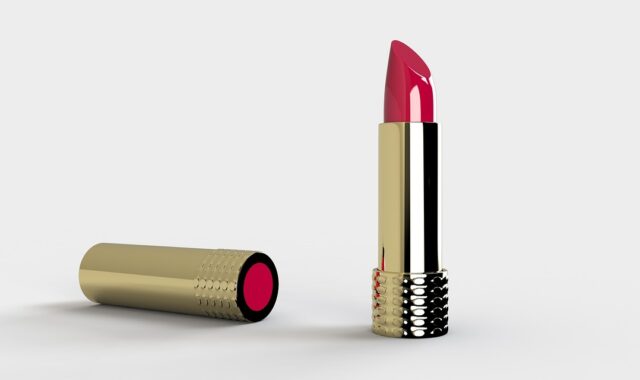
Beauty packaging is more emotionally coded than many other consumer goods categories. A moisturizer jar, lipstick case or fragrance carton is expected to communicate sensory value before the customer touches the formula. AI can help teams explore that emotional range quickly, from clinical white space to maximalist color, soft-touch wellness cues or refill-led premium minimalism. It can also help smaller brands visualize product families before they invest in full photography or physical prototypes.
Beauty also brings category-specific risks. Generated concepts may overuse familiar category codes and produce designs that feel generic. They may reproduce visual patterns associated with existing brands, raising originality and intellectual property concerns. They may also create unrealistic product textures, impossible transparent effects, misleading pack sizes or exaggerated before-and-after implications. For skincare and cosmetics, these issues can affect both brand trust and compliance.
A practical review checklist should include:
- Does the concept clearly identify the product type without relying on misleading imagery?
- Is there enough space for required information in the target markets?
- Are claims already approved, or are they only creative placeholders?
- Can the proposed material, closure, label and decoration be sourced at the intended volume?
- Does the pack remain legible in e-commerce thumbnails and on retail shelves?
- Could the design be confused with a competitor’s trade dress?
- Are sustainability cues supported by real material and end-of-life evidence?
A practical AI packaging design workflow for beauty teams
The most useful workflow keeps creative exploration fast while slowing down the points where mistakes become expensive. A beauty team can start with a structured design brief that defines the product, audience, channel, price tier, regulatory markets, mandatory claims and packaging constraints. AI can then generate visual territories, not final answers. Designers should curate the strongest routes and translate them into more precise design systems: typography, color, material finish, hierarchy, dieline logic and component behavior.
From there, the workflow should move from image to evidence. Suppliers can comment on manufacturability, minimum order quantities, decoration methods, closure compatibility and material options. Regulatory reviewers can confirm labeling and claims. Sustainability specialists can check recyclability, recycled content assumptions, refill practicality and packaging reduction opportunities. Only after these checks should the team develop production artwork and physical prototypes.
This approach also creates a better archive. Each decision can be linked to a reason: brand differentiation, consumer readability, material availability, compliance requirement or sustainability target. That record is valuable when teams refresh a line, expand into a new market or respond to retailer documentation requests. AI is most useful when it strengthens this decision trail rather than replacing it.
Frequently asked questions
Can AI create final cosmetic packaging artwork?
It can help create concept visuals and layout options, but final cosmetic packaging artwork should still be prepared and checked by qualified designers, regulatory reviewers and production partners. Final files need correct dielines, color management, typography, barcode placement, legal text, warnings and supplier specifications.
Is AI packaging design useful for small beauty brands?
Yes, especially for early exploration and communication. Smaller teams can use AI-assisted concepts to compare brand directions before committing budget to photography, prototypes or agency rounds. The risk is treating those concepts as production-ready. Small brands still need labeling, supplier and claims review.
Can AI determine whether packaging is recyclable?
No. AI can help organize recyclability questions and compare design options, but recyclability depends on real materials, inks, adhesives, labels, component separation, local collection systems and applicable rules. Supplier documentation and market-specific guidance remain necessary.
How should beauty teams avoid generic AI-looking packaging?
Start with a specific brand strategy rather than a generic style request. Include audience insight, price positioning, product texture, ingredient story, channel, competitor boundaries and packaging constraints. Then use human curation to remove predictable, overused or competitor-like concepts.
What is the biggest limitation of AI in packaging design?
The main limitation is that AI can make an unresolved idea look finished. A convincing render may still be noncompliant, unmanufacturable, expensive, hard to recycle or too close to another brand. The best workflows keep AI in an exploration and decision-support role while experts validate the package before launch.
The bottom line for beauty packaging
AI packaging design is becoming a practical part of beauty packaging because it helps teams explore more options, compare visual systems and respond to complex briefs faster. Its value increases when it is tied to real constraints: cosmetic labeling, sustainability policy, material data, supplier capability and brand distinctiveness. The strongest teams will not ask AI to replace packaging expertise. They will use it to make that expertise more focused, better supported by evidence and better timed in the development process.