Egg packaging design principles for protective beauty packaging

Why egg packaging design matters beyond the grocery shelf
Egg packaging design starts with a demanding brief: a fragile, rounded product has to move through packing, transport, stacking, retail handling and consumer inspection without unnecessary material. That same brief is relevant to beauty packaging. Glass serum bottles, refillable jars, ampoules, pressed powders, fragrance minis and gift sets all need protection, presentation and credible sustainability choices.
The value of egg-inspired packaging is not that every beauty pack should look like an egg carton. The useful lesson is structural: separate each unit, absorb shock, prevent movement, keep the pack easy to inspect and design the material claim around what the package can actually support.
For more packaging ideas and industry commentary, visit the Packaging design section on Weidushu.
The core idea is protection through structure, not bulk
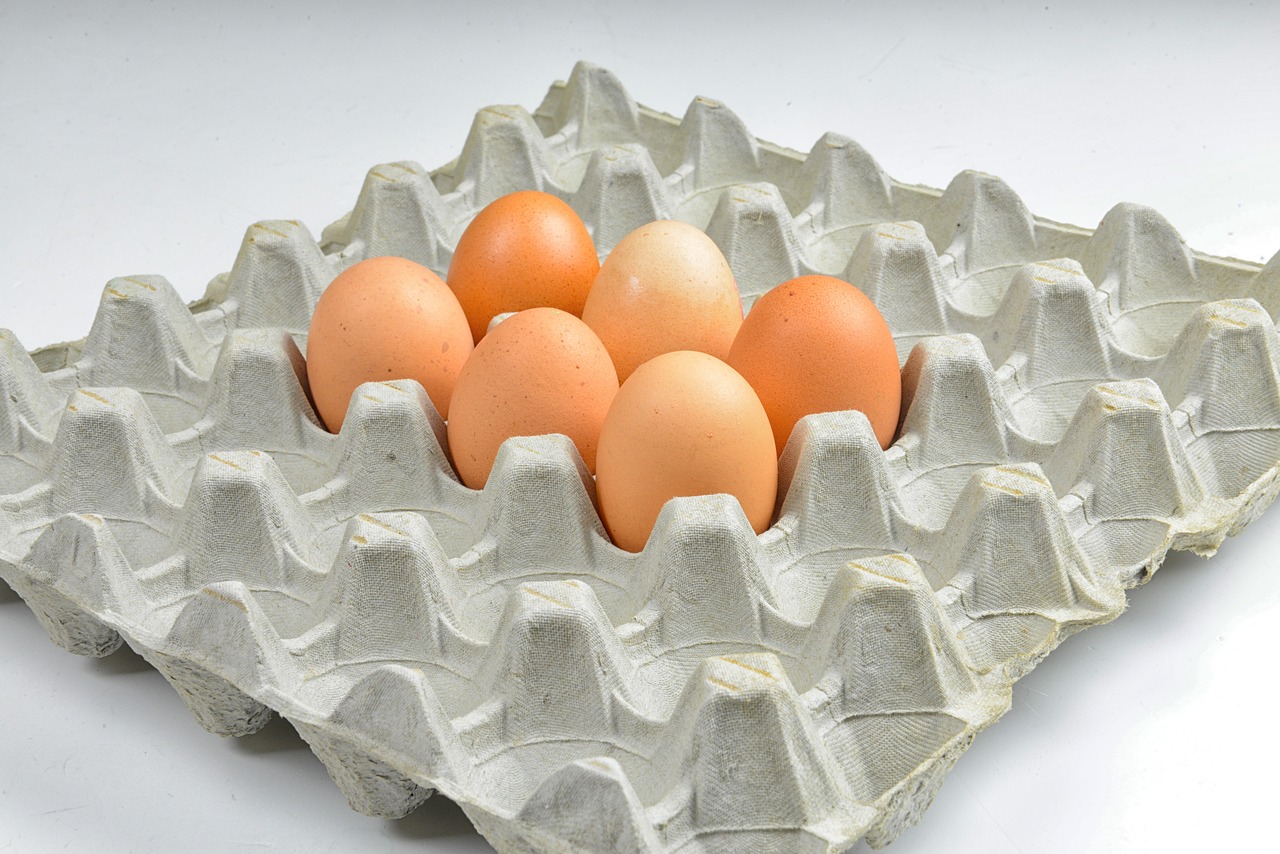
Traditional egg packs show how much protection can come from geometry. Food and Agriculture Organization guidance on egg handling explains that shell eggs are naturally protected by the shell but still require specialized packaging. The package has to protect against crushing, moisture loss, contamination, odor transfer, temperature stress and handling damage. In practice, the egg carton does not depend on one thick wall. It uses repeated cells, raised posts, controlled contact points and a lid that helps distribute pressure across the structure.
This is a useful lesson for beauty packaging. Many premium cosmetics still use oversized rigid boxes, dense foam blocks or multiple plastic trays to signal value and reduce breakage. Egg packaging points to another route: build protection into the form. A molded tray can hold a glass bottle away from the outer wall, stop a cap from striking another component and distribute compression through ribs or posts. When the structure does real work, the packaging can feel intentional rather than excessive.
Separate fragile items before they collide
The egg carton works because every egg has its own cell. Each unit is protected from the outside and from its neighbors. Beauty packaging often needs the same logic. A skincare discovery set may include several glass vials. A makeup kit may combine a mirror, compact, brush and refill pan. A fragrance sampler may contain small tubes that can scuff, leak or rattle. Separating each component reduces the risk of internal impact during transport.
Use contact points carefully
A good egg tray does not clamp the product across its full surface. It uses shaped contact areas that hold the egg while leaving space around it. This matters for beauty packs because overly tight inserts can scratch coatings, deform labels or make unboxing awkward. A molded fiber or paperboard insert should support a bottle at stronger areas, such as the shoulder or base, while avoiding pressure on pumps, droppers, decorative caps and labels.
Material choices and their trade-offs
Egg packaging commonly uses molded pulp, paperboard, plastic or foam. Each material solves a different part of the design problem. Molded pulp and paperboard are associated with a natural, tactile look and can provide cushioning through shape. Clear plastic can make inspection easier and can resist moisture. Foam can cushion well, but in many markets it raises stronger end-of-life and perception concerns.
Beauty packaging teams should not treat molded pulp as an automatic answer. It can be an effective secondary-packaging material for jars, bottles and refill capsules, but it has limits. Fibers can create dust if poorly specified. Wet bathroom environments can soften uncoated pulp. Dark fibers or recycled-content variation may affect color consistency. A premium skincare brand may welcome that organic texture, while a clinical dermocosmetic brand may need a cleaner, smoother insert.
| Material approach | What it does well | Limitations to check | Beauty packaging fit |
|---|---|---|---|
| Molded pulp or molded fiber | Cushioning, separation, tactile sustainability cue, custom cell geometry | Moisture sensitivity, dust, color variation, coating compatibility | Gift sets, glass jars, refill pods, ecommerce protection |
| Paperboard carton with folded insert | Print quality, flat shipping, lower tooling complexity | Less three-dimensional cushioning than molded forms | Serums, tubes, boxed sets, retail-ready packs |
| Clear PET or similar plastic tray | Visibility, moisture resistance, precise fit | Plastic reduction concerns, recycling depends on format and local systems | Retail display, color cosmetics, sets where inspection matters |
| Foam insert | Shock absorption and luxury feel | Recycling challenges and negative sustainability perception | Limited-use premium gifting where protection outweighs other goals |
What beauty brands can borrow from egg packaging design
The most useful egg packaging ideas are not visual clichés. They are repeatable design principles that can be translated into cosmetic formats without making the product look like groceries.
- Cell-based protection: Give each bottle, jar or refill its own protected space instead of relying on a loose shared cavity.
- Raised posts and ribs: Use vertical features to resist compression when cartons are stacked in warehouses or ecommerce shipments.
- Controlled visibility: Let shoppers or packers verify contents without unnecessary handling where possible.
- Material efficiency: Replace solid blocks with shaped structures that use less material while maintaining support.
- Fast packing and counting: Make the tray layout intuitive for production teams, especially for multi-piece kits.
- Clear labeling zones: Reserve practical space for product name, shade, size, batch information, recycling notes and disposal instructions.
For beauty, these principles work especially well in secondary packaging. A molded tray does not need to touch the formula, so it avoids many compatibility questions that apply to primary packaging. It can also be redesigned faster than a bottle mold, making it useful for seasonal kits, limited editions and ecommerce protection tests.
Use egg-carton logic without copying egg-carton aesthetics
An egg carton shape can be charming for novelty products, bath bombs or playful limited editions. Most beauty brands, however, should be careful with literal references. A luxury serum does not need to look like breakfast packaging. Designers can instead borrow the engineering: soft cells, nested bases, compression ribs and a lid that locks the structure together. The visual language can still be minimal, clinical, colorful or premium.
Plan the unboxing sequence
Egg packaging is simple to open, inspect and close. Beauty packs should be just as intuitive. A customer should understand which part to lift first, where the refill sits and how to remove a fragile bottle without tugging on the pump. If an insert is too tight or too decorative, protection becomes friction. A good tray supports the product while still allowing easy removal by hand.
Sustainability claims need more discipline than design language
Egg-inspired packaging often signals sustainability because molded pulp and paperboard look familiar, simple and fiber-based. That visual signal can help a brand, but it can also create risk if the claim goes beyond the evidence. In the United States, the Federal Trade Commission’s Green Guides emphasize that recyclable, compostable, degradable, recycled-content and refillable claims need substantiation. For example, an unqualified recyclable claim can be problematic if appropriate recycling facilities are not available to a substantial majority of consumers or communities where the product is sold. Compostable claims also require reliable evidence that the package will break down safely in the relevant composting conditions.
For beauty brands selling in Europe, the regulatory direction is also moving toward clearer design-for-recycling expectations and more specific packaging obligations. Regulation (EU) 2025/40 on packaging and packaging waste places greater attention on recyclability, recycled content and packaging minimization. The practical takeaway is straightforward: do not let the pack say more than the supply chain can prove.
This is where egg packaging design can be useful again. A simpler structure often makes claims easier to support. A mono-material fiber tray with water-based inks may be easier to explain than a box that combines laminated board, a plastic window, a magnetic closure, a foam insert and metallic film. The most credible sustainable pack is usually not the one with the loudest green language; it is the one with fewer incompatible parts and clearer disposal instructions. See also: BEAUTY INGREDIENTS.
How to adapt egg packaging for specific beauty formats
Different beauty products need different levels of protection. Egg packaging principles should be adapted around the product’s weak points, not applied as a generic style.
Glass serum bottles and droppers
For serums, the vulnerable areas are the glass base, shoulder, pipette and cap. A molded insert can cradle the bottle at the base and shoulder while leaving the dropper free from direct pressure. If the product ships through ecommerce, the outer carton also needs compression and drop evaluation, because a well-designed insert cannot compensate for a weak shipper.
Refillable jars and capsules
Refill systems benefit from cell-based organization. A starter jar, refill pod and instruction leaflet can each sit in a defined position. This reduces confusion and helps the customer understand the reuse system. Sustainable Packaging Coalition research with Provoke Insights in late 2025 found that refillable skincare appeal depends heavily on ease of use, convenience and product availability. That finding supports a packaging lesson: refill design should feel obvious, not educationally demanding.
Pressed powders and makeup palettes
Powders are sensitive to shock because the formula can crack even when the outer compact survives. A tray inspired by egg packaging can suspend the compact slightly away from the outer wall, while paperboard spacers reduce movement. Designers should also consider opening orientation so the mirror or decorative surface is not forced against a rough insert.
Bath bombs and solid beauty products
Bath bombs, cleansing bars and solid fragrance formats can use more literal egg-carton references because their shapes are often rounded and tactile. In these cases, molded pulp cells can provide both protection and display. The caution is moisture: if the product releases oils, fragrance or humidity, material testing is needed to avoid staining, softening or odor absorption.
A practical design checklist
Before choosing an egg-inspired pack, use a checklist that connects concept, engineering and claims. This helps avoid the common mistake of approving a render before proving the structure.
- Define the product risk: Is the main problem breakage, scuffing, leakage, powder cracking, label damage or customer confusion?
- Map the journey: Consider filling, line packing, warehouse stacking, pallet transport, courier delivery, retail display and bathroom storage.
- Choose the contact points: Support stronger parts of the component and avoid delicate closures, pumps, labels and decorative coatings.
- Prototype the insert: Test removal by hand, packing speed, product rotation, rattle, compression and drop performance.
- Check material compatibility: Review dust, odor, moisture, oil transfer, ink rub, coating behavior and color tolerance.
- Simplify the material mix: Remove unnecessary windows, films, magnets or mixed-material decorations unless they serve a real purpose.
- Substantiate every claim: Keep evidence for recycled content, recyclability, compostability, refillability or source reduction before printing claims.
- Write disposal guidance clearly: Tell the customer what to separate, recycle, reuse or discard based on the actual package design and target market.
Frequently asked questions
Is egg packaging design only relevant to food packaging?
No. The original problem is food-related, but the design principles are broader. Any fragile rounded or small-format product can benefit from cell separation, cushioning geometry and compression-resistant structure. Beauty products such as glass serums, ampoules, solid bath products and refill pods are strong candidates.
Is molded pulp always sustainable for beauty packaging?
Not always. Molded pulp can reduce plastic use and create a strong tactile sustainability cue, but its real impact depends on fiber source, coatings, inks, manufacturing energy, transport efficiency and local recycling or composting options. Claims should be specific and evidence-based.
Can egg-inspired packaging look premium?
Yes, if the design avoids a rough commodity look. Premium results depend on clean geometry, controlled texture, accurate fit, thoughtful color, good print quality and a smooth unboxing sequence. The pack can borrow egg-carton engineering without visually copying a supermarket carton.
What is the biggest mistake in egg-inspired beauty packaging?
The biggest mistake is treating the style as a sustainability shortcut. A molded tray that looks natural but uses unclear coatings, mixed materials or unsupported compostable claims can create confusion. The structure, material and claim must work together.
Should beauty brands use clear windows like some egg cartons?
Only when visibility solves a real problem. A window can help show shade, texture or set contents, but it may add material complexity. If the product can be shown through photography, color coding or a simple opening experience, a window may not be necessary.
The takeaway
Egg packaging design is valuable because it shows that protection can come from geometry rather than excess. For beauty brands, the strongest applications are molded or folded inserts that isolate fragile products, reduce movement, improve packing efficiency and support clearer sustainability communication. The goal is not to make cosmetics look like eggs. The goal is to use the same disciplined thinking: protect the product, respect the material, simplify the structure and make every claim defensible.