Wok buying guide for choosing the right pan for your stove
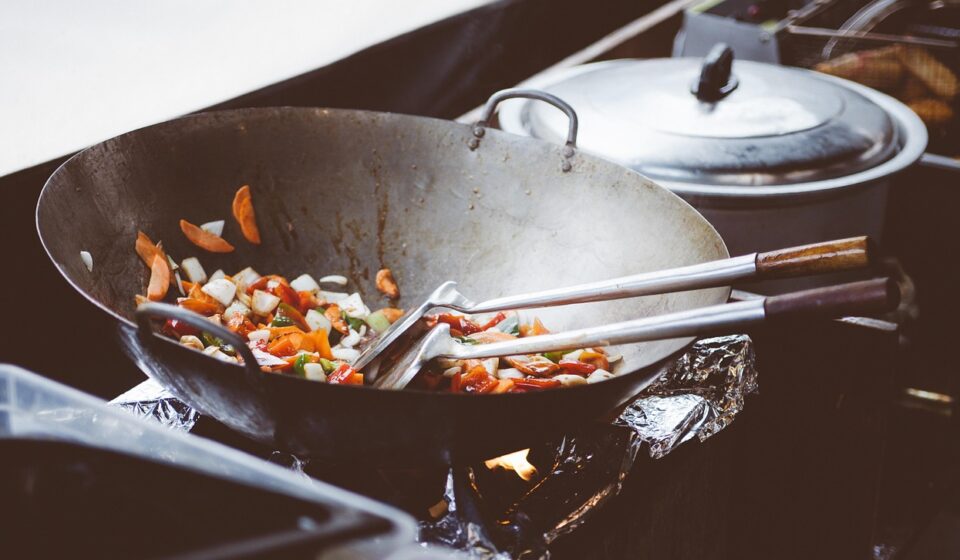
What to choose if you want one practical wok
For most home kitchens, a 14-inch flat-bottom carbon steel wok is the most practical starting point. It answers the main question behind a wok buying guide: which pan will work safely and effectively on the stove you already have? Carbon steel heats quickly, is lighter than most cast iron, can develop a natural seasoning layer, and is widely used for stir-frying. A flat bottom sits securely on electric, glass, and induction cooktops, and it is also easy to use on standard gas ranges.
A round-bottom wok still makes sense with a dedicated gas wok burner or a stable wok ring, but it is less convenient on many modern indoor stoves. Nonstick woks can be useful for lower-heat cooking, eggs, or delicate foods, but they are not the most flexible choice for very hot stir-frying. Stainless steel woks are durable and low-maintenance, although they usually require more oil and better heat control to reduce sticking.
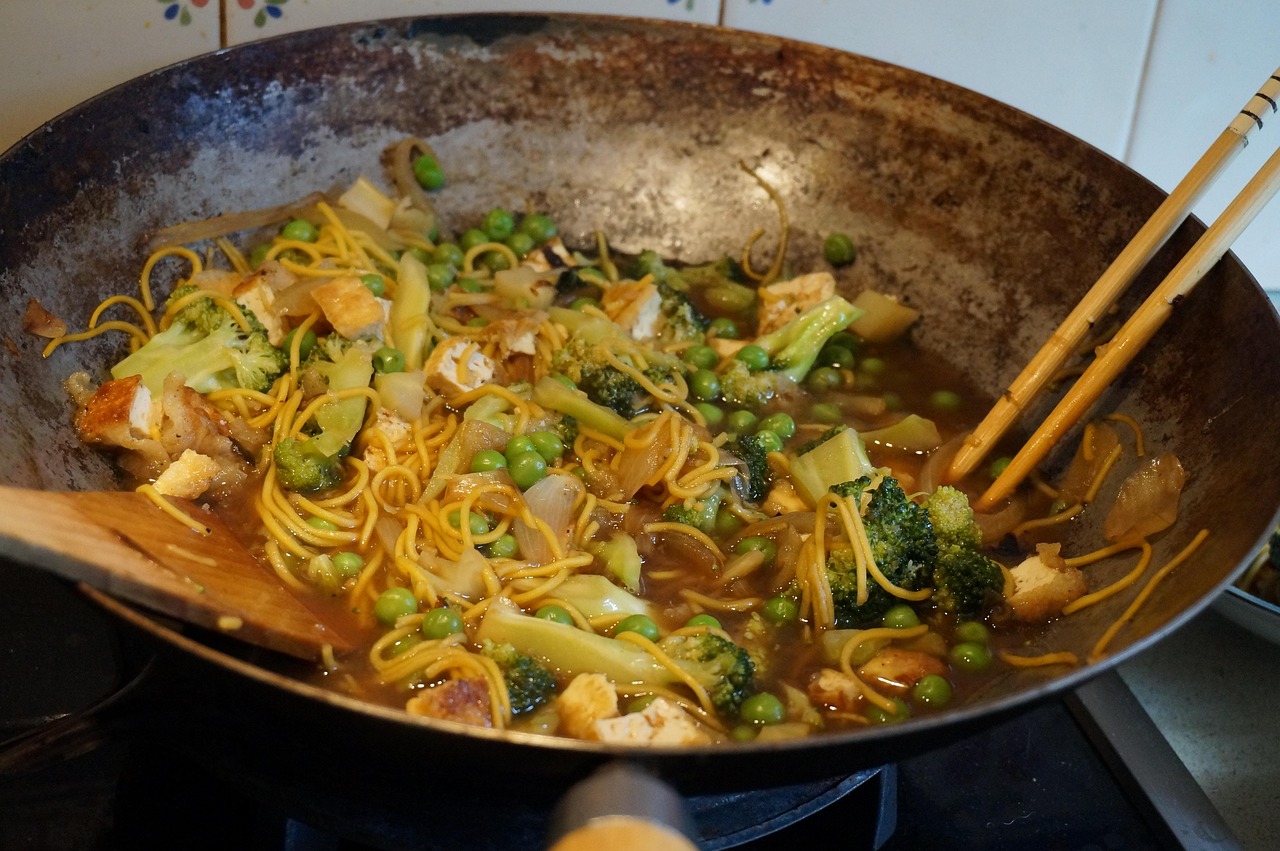
This guide does not rank specific products. It gives you a decision framework for comparing any wok listing, whether you are shopping online, at an Asian grocery store, or in a cookware aisle. For more product-selection articles, visit our buying guides section.
Start with your stove, not the wok material
The most common buying mistake is choosing a wok by tradition first and stove fit second. A wok is only useful if its base makes safe, stable, and efficient contact with the heat source.
Gas stove
Gas is the most flexible option. A flat-bottom wok works well on most home gas burners because it can sit directly on the grate without special support. A round-bottom wok can also work, but it usually needs a wok ring or a burner designed for curved cookware. The ring must be stable, centered, and compatible with the stove. If the setup wobbles, the traditional shape is not worth the safety tradeoff.
For standard indoor gas ranges, flat-bottom carbon steel is usually the more practical choice. For an outdoor propane burner or a dedicated high-output wok burner, a round-bottom carbon steel wok becomes more attractive because the flame can reach the curved sides more effectively.
Electric coil and glass-top electric
Electric coil and smooth glass cooktops need flat contact. A round-bottom wok will not sit securely and may not transfer heat evenly. Choose a flat-bottom wok with a base wide enough to rest steadily on the heating area. On glass-top stoves, avoid dragging heavy cookware across the surface, especially cast iron, because the weight and roughness can scratch the cooktop.
Induction
Induction adds one more requirement: magnetism. Carbon steel and cast iron are generally induction-friendly materials, but the wok still needs a flat magnetic base that matches the induction zone. Before buying, check the seller’s stated induction compatibility and look for a flat bottom rather than a rounded shape with only a small contact point. If the induction hob has a small cooking zone, an oversized wok may heat mainly in the center while the sides remain cooler.
Compare wok materials by how you actually cook
Material affects weight, heat response, maintenance, price, and cooking feel. No single material is best for every kitchen, but the tradeoffs are easy to evaluate once you match them to your cooking habits.
| Material | Main strengths | Limitations | Good fit for |
|---|---|---|---|
| Carbon steel | Responsive heat, moderate weight, develops seasoning, traditional feel | Needs seasoning and drying; can rust if neglected | Most stir-fry focused home cooks |
| Cast iron | Strong heat retention, durable, naturally induction-compatible if flat | Heavy; slower to respond; harder to toss food | Cooks who value heat retention over agility |
| Stainless steel | Rust-resistant, non-reactive, easy to wash | More sticking risk; less traditional stir-fry feel | Low-maintenance cooks who avoid seasoning |
| Nonstick coated | Easy release, simple cleanup, friendly for eggs and delicate foods | Heat limits; coating wears; less suited to aggressive high-heat cooking | Lower-heat cooking and beginners who prioritize cleanup |
Why carbon steel is often the default recommendation
Carbon steel gives a wok a useful balance for home cooking. It is thin enough to respond quickly when ingredients are added, but sturdy enough for repeated heating when made well. It also develops a dark patina through seasoning and use. That layer is not the same as a synthetic nonstick coating, and it will not make food slide forever, but it can reduce sticking when the pan is properly heated and lightly oiled.
When cast iron makes sense
Cast iron can perform well when you want heat retention and do not plan to toss the wok often. The drawback is weight. A heavy cast iron wok can be tiring to lift, difficult to maneuver, and less responsive when you need to lower heat quickly. It is better for steady searing than for agile, fast-motion wok cooking.
When nonstick is the wrong shortcut
A nonstick wok may be convenient, but it should not be treated like a restaurant-style high-heat stir-fry pan. Many coated pans have temperature limits set by the manufacturer, and overheating can shorten coating life. If you mostly cook saucy noodles, fried rice at moderate heat, or vegetables without intense searing, nonstick can be acceptable. If you want a pan to preheat hard, sear meat, and handle metal tools, choose uncoated carbon steel instead.
Choose the right size, thickness, and shape
Once you know your stove and preferred material, the next decision is size. Bigger is not always better. A wok needs enough surface area for tossing and evaporation, but it also has to fit your burner and storage space.
12-inch, 14-inch, or 16-inch wok
- 12-inch wok: Good for one or two people, small kitchens, compact burners, and lighter handling. It can feel crowded for family-size stir-fries.
- 14-inch wok: The most versatile home size for many cooks. It gives enough room to move ingredients while still fitting standard stoves.
- 16-inch wok: Useful for large households or outdoor burners, but often too wide for indoor residential cooktops. If the flame or induction zone only heats the center, the extra width may not help.
For most buyers, 14 inches is the practical middle ground. If you cook in small batches, 12 inches may be easier to manage. If you have an outdoor burner and cook for groups, 16 inches can be worth considering.
Thickness and weight
Very thin carbon steel heats fast but may feel flimsy and can be more prone to warping, especially on powerful burners or induction. Very thick carbon steel is more stable, but it is heavier and slower to respond. Many home cooks do well with a wok that feels rigid when pressed, lifts comfortably with one hand, and does not have an overly thin base.
If a listing gives a thickness measurement, treat it as one data point rather than a guarantee of quality. Also consider handle attachment, base flatness, stated stove compatibility, and return policy. A wok that looks perfect on paper is not useful if it rocks on your stove or is too heavy for your cooking style.
Flat bottom vs round bottom
Flat-bottom woks are adapted for modern stoves. They offer stability, direct contact, and broader compatibility. Round-bottom woks are more traditional and can be excellent over a flame that surrounds the curve, but they are more specialized. If you are unsure, buy flat bottom. If you already have a stable wok burner setup and know how you will support the pan, round bottom becomes a realistic choice.
Do not overlook handles, lids, and small design details
Two woks can share the same size and material yet feel very different in daily use. Handles, helper grips, and rim design matter because wok cooking involves lifting, tilting, stirring, and moving food quickly.
Long handle or two loop handles
A long handle, sometimes called a pow-style handle, is useful if you want to tilt, lift, and toss. A small helper handle on the opposite side makes it easier to carry a full wok. Two loop handles, often associated with Cantonese-style woks, are compact and good for lifting with both hands, but they are less convenient for one-handed tossing. See also: BEAUTY INGREDIENTS.
Wood handles stay cooler than bare metal during many stovetop tasks, but they may limit oven use and can loosen over time if neglected. Metal handles are durable and oven-tolerant, but they can get hot. If you choose metal, plan to use a towel or mitt.
Lid compatibility
A lid is not mandatory for stir-frying, but it expands what the wok can do. With a lid, you can steam vegetables, finish dumplings, braise greens, or control splatter. Some woks are sold with domed lids; others require a separate purchase. If you want one-pan flexibility, check the rim diameter before buying.
Interior texture and coating clarity
Some carbon steel woks are smooth, while others are hammered or textured. Texture can affect appearance and grip, but it is not a substitute for correct heating and seasoning. More important is clarity about the surface. Avoid vague listings that do not clearly state whether the wok is uncoated carbon steel, pre-seasoned carbon steel, enamel, ceramic-coated, or nonstick-coated.
Safety and quality checks before you buy
A wok is a food-contact item, so quality checks should go beyond price and photos. Buy from sellers that clearly describe the material, coating, dimensions, stove compatibility, and care instructions. If a wok is decorative, vintage, or unlabeled, do not assume it is safe for cooking.
Public food-safety agencies, including the U.S. Food and Drug Administration, have warned that some imported cookware and ceramic foodware may leach lead when not made for safe food contact. That does not mean ordinary carbon steel woks are a lead concern by default. It means shoppers should be cautious with unknown decorative cookware, colorful glazes, unverified coatings, and products that make vague safety claims without identifying materials.
- Choose cookware clearly marketed for cooking, not display.
- Look for material and coating details in the product description.
- Check whether the manufacturer allows use on your stove type.
- Avoid vague claims such as “all stove safe” with no specifics.
- For coated pans, follow the manufacturer’s heat and utensil guidance.
Also consider return options. A wok can look correct online but arrive with a warped base, sharp handle rivets, poor balance, or dimensions that do not match your stove. A fair return policy is part of a smart purchase.
How to season and care for a carbon steel wok
Uncoated carbon steel rewards care, but the routine is not complicated. Most new carbon steel woks arrive with a protective factory layer to reduce rust during shipping. The exact cleaning steps vary, so follow the manufacturer’s instructions. In general, you wash away the protective layer, heat the dry wok, apply a very thin film of oil, and heat until the surface begins to darken. Repeated cooking continues the process.
Basic care routine
- Wash before first use according to the product instructions.
- Dry completely after washing to prevent rust.
- Heat the wok before adding oil when stir-frying.
- Use a small amount of oil and cook in batches when needed.
- After washing, warm the wok briefly and wipe with a light oil film if the surface looks dry.
Do not panic if the color changes unevenly. A working carbon steel wok often becomes brown, bronze, blue-black, or patchy before it develops a more uniform patina. Seasoning is a functional cooking surface, not a beauty finish. If rust appears, it can often be scrubbed away and the area re-seasoned.
What to avoid
Avoid soaking carbon steel for long periods, putting it in the dishwasher, or leaving acidic sauces in the wok after cooking. Acidic ingredients can dull seasoning, especially in a new pan. That does not mean you can never cook with vinegar, tomato, or citrus; it means the wok should not be used like a storage bowl after the meal is done.
A practical buying checklist
Use this checklist before you add a wok to your cart:
- Stove match: Flat bottom for electric, glass, and most induction; flat or round for gas depending on support.
- Material: Carbon steel for responsive stir-frying; cast iron for heat retention; stainless for low rust maintenance; nonstick for lower-heat convenience.
- Size: 14 inches for most homes, 12 inches for small kitchens, 16 inches for large burners or outdoor cooking.
- Weight: Light enough to lift safely when full.
- Base: Stable, flat, and suitable for your burner diameter.
- Handles: Comfortable grip, secure attachment, and a helper handle if you cook larger portions.
- Surface: Clearly identified as uncoated, pre-seasoned, stainless, enamel, ceramic-coated, or nonstick.
- Care: Instructions match the amount of maintenance you are willing to do.
The best purchase is not the most traditional-looking wok or the most expensive one. It is the wok that fits your heat source, cooking habits, storage space, and willingness to maintain it.
Frequently asked questions
Is a flat-bottom wok less authentic?
It is less traditional than a round-bottom wok, but it is often more practical for modern home stoves. A flat-bottom carbon steel wok can still stir-fry well when it is preheated, used in small batches, and matched to a suitable burner.
Can I use a wok on induction?
Yes, if the wok has a flat magnetic base and the manufacturer lists it as induction-compatible. Round-bottom woks generally do not work well on standard flat induction cooktops unless a specialized system is involved.
Should beginners buy pre-seasoned carbon steel?
Pre-seasoning can make the first use less intimidating, but it does not remove the need for care. You still need to dry the wok after washing, avoid long soaking, and build the surface through regular cooking.
Is a wok only for stir-fry?
No. A wok can stir-fry, steam, shallow-fry, deep-fry, braise, boil noodles, and reheat leftovers. Its high sloped sides are useful for tossing food and controlling splatter.
How much should I spend on a first wok?
You do not need a luxury wok to start. Prioritize the right shape, material, comfortable weight, secure handles, and clear care instructions. Accessories and premium finishes matter less than stove fit and safe construction.